A 12-piece wardrobe for a city break
Build a practical 12-piece travel capsule from clothes you already own, with adaptable outfits for walking, dinner and the journey itself.
In this story
A travel capsule should make getting dressed easier. If it requires buying an entirely new wardrobe or wearing combinations you would avoid at home, the system is doing too much.
This twelve-piece example is a starting point for a mild-weather city break. The count includes shoes and outerwear, but excludes underwear, socks, sleepwear, bags and personal essentials. Adjust it for your body, your style, the forecast and any specific dress requirements. Twelve is a useful editing constraint, not a universal ideal.
Begin with the days, not the clothes
Write down what the trip actually contains: a journey, two days of walking, a museum, a dinner and perhaps a work meeting. Add any activity that needs genuinely different clothing. A formal event has a stronger claim on suitcase space than an imagined spontaneous invitation.
Now identify the hardest combination: usually shoes comfortable enough for a full day and an outfit you still enjoy wearing at dinner. Solve that first. The other pieces should support it.
Choose a base palette from clothes you already wear together. Navy, cream and brown might work; so might black, white and a strong colour. The point is compatibility, not compulsory neutrals.
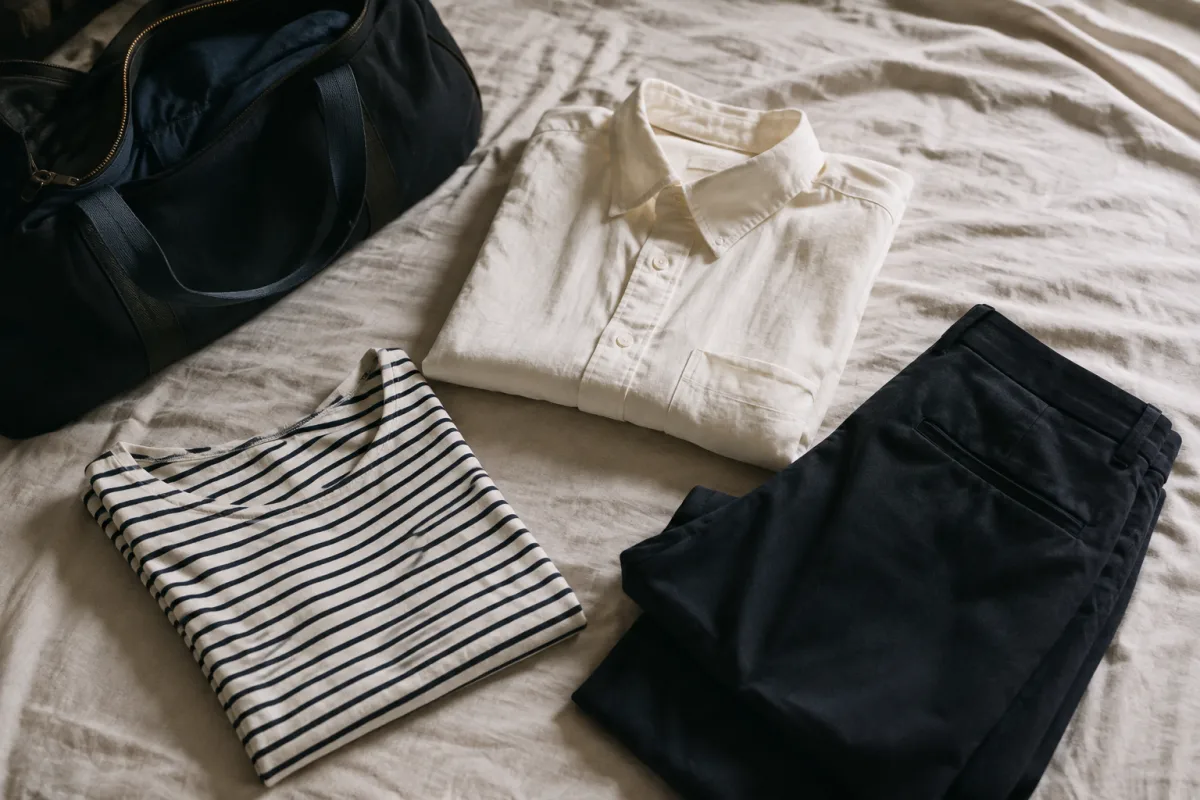
The twelve-piece example
- A plain T-shirt you enjoy wearing on its own.
- A second everyday top in a compatible colour.
- A long-sleeved top for a different temperature or silhouette.
- A button-front shirt that works open or closed.
- A lightweight knit or cardigan.
- Comfortable tailored trousers.
- A second bottom: jeans, another trouser shape or a skirt.
- One alternative piece, such as a dress, jumpsuit or dinner top.
- A light jacket that fits over the knit.
- An outer layer appropriate to the forecast.
- Your established walking shoes.
- A second pair of shoes with a clearly different use.
If a jacket already covers your weather needs, remove the redundant layer. If you only wear one type of shoe, the second pair may not be needed. An edited eleven-piece wardrobe is better than a twelve-piece list padded to satisfy arithmetic.
Build outfits before packing
Lay everything out and make complete combinations, including shoes. Do not assume two pieces work together because they share a colour. Hem lengths, volume, waistbands and the way a jacket closes can change the result.
For the journey, try the first top, comfortable trousers, knit and walking shoes. For a museum day, exchange the top and add the shirt or jacket. For dinner, use the alternative piece with a bottom and the second shoes, if those shoes have earned their place.
Photograph the combinations on your own phone if that helps you remember them. These are working notes, not outfit content you have to publish. Repeat the combinations you like; a city break does not require a new identity each morning.
Put each piece through a practical test
Sit down in the trousers. Raise your arms in the shirt. Wear the shoes for a normal walk before departure. Try the outer layer over the thickest combination you intend to wear underneath it.
Look for small irritations you tolerate for an hour at home but would dislike all day: a slipping strap, a collar that needs constant attention, a pocket that will not hold what you expect. Remove the problem piece before searching for another accessory to compensate for it.
Check the care instructions as well. A favourite garment that needs specialist cleaning can still come with you, but it should not be the only available option for several consecutive days. Our travel garment-care guide helps make that decision.
Adapt the system to the season
In hot weather, change fabric weight, coverage and fit according to what you personally find comfortable. In cold weather, the outerwear and layering requirements may expand the list. Do not force a mild-weather template onto an entirely different climate.
If rain is likely, check the performance and care information for the actual coat and shoes you own. A trench shape or technical-looking finish does not, by itself, establish how a garment performs in sustained rain.
Edit the extra, not the essential
Pack underwear, socks, personal care and any necessary equipment around your real needs. A capsule is not a competition to carry the fewest possible possessions. It is a way to reduce duplicate decisions.
Before closing the bag, identify the piece you have included only because there is room. If you cannot name when you will wear it, leave it out. For the physical packing stage, move on to our carry-on guide.
The result should feel familiar: your own clothes, organised so you can spend less of the trip thinking about them.