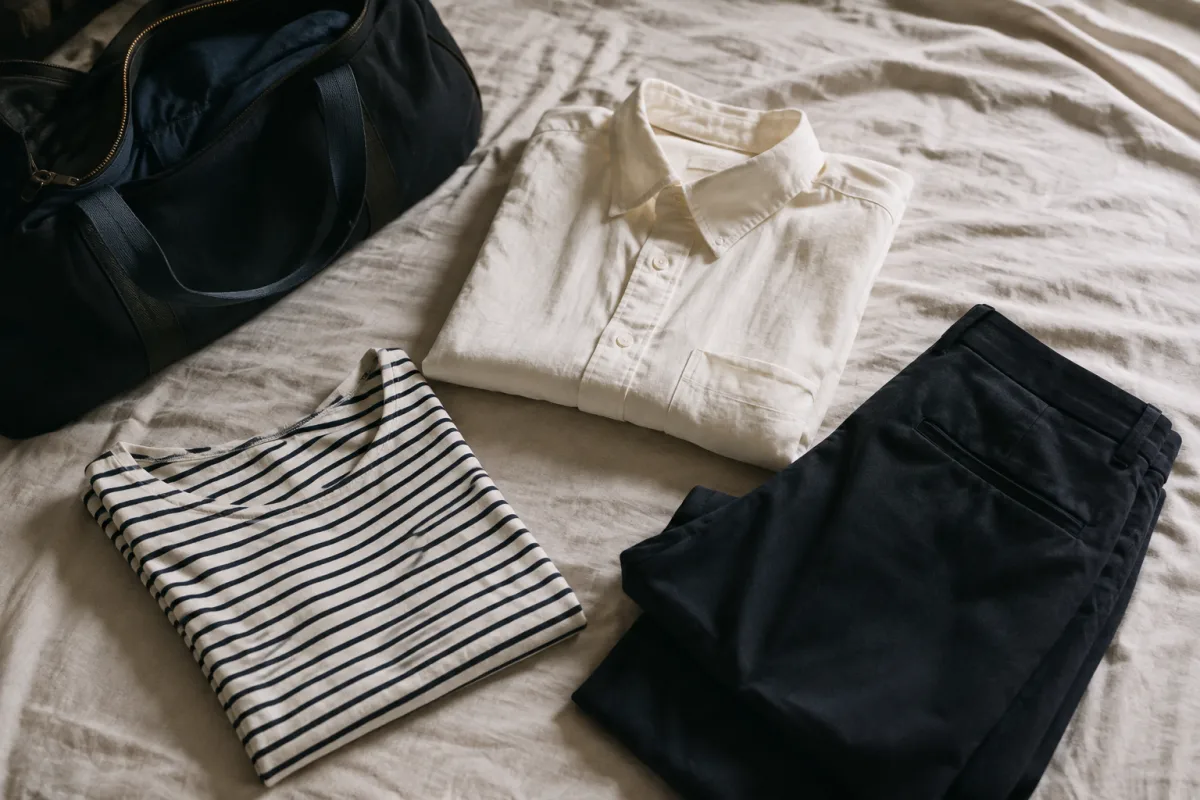
Take care of your clothes, even out of a suitcase
Plan a simple travel clothing-care routine: read labels, unpack thoughtfully, handle laundry realistically and avoid last-minute experiments with favourite pieces.
In this story
Clothing care begins before packing. The easiest travel wardrobe is not necessarily the one with the fewest pieces; it is the one you can keep comfortable and presentable with the time and facilities you actually have.
Start by looking at the care labels of the clothes you want to bring. Then decide which pieces you can manage yourself, which need a professional service and which are better suited to another trip.
Read the label before departure
A fibre name is not a complete care instruction. The finished garment may contain linings, trims, prints or construction details that need particular treatment. Read the full label, including drying, ironing and any warnings, before planning a wash.
The FTC's guide to care labelling explains why cleaning instructions and relevant warnings belong together. For travellers, the practical implication is to follow the garment's directions instead of applying one generic cleaning method to everything in the bag.
If a label is missing or unclear, ask the maker or an appropriate cleaner before experimenting. A favourite garment is not a useful place to test an improvised method the night before you need to wear it.
Pack with the first evening in mind
Keep easily marked or delicate pieces away from shoe soles, exposed fastenings and leaking products. Use a separate shoe bag and a reliable toiletry container. Close hooks and zips where appropriate so they do not catch neighbouring fabrics.
Do not force a structured garment into the same tight bundle as a soft everyday top. Give pieces the space they need, or choose an alternative that suits the bag. Compression can make luggage smaller, but it does not make every item suitable for tight packing.
Keep one outfit accessible if you may arrive before you can properly unpack. That avoids turning the whole suitcase inside out for the shirt you placed at the bottom.
Establish a small arrival routine
When you reach your accommodation, take out the items that need attention first. Hang garments that are suitable for hanging, and support pieces according to their care instructions. Keep clothing away from unsuitable heat sources and surfaces that could mark it.
Separate clean, worn and genuinely dirty items in a way you can remember. Three elaborate containers are unnecessary; a consistent place for each category is enough. The goal is to avoid repacking everything into one anonymous pile.
Check the available laundry facilities early. If you need a service, ask about turnaround, the cleaning method, any item restrictions and the price before handing over clothing. Do not assume a same-day service or special treatment is available.
Make washing a plan, not a rescue mission
If a garment permits the washing method available to you, choose a suitable product and follow its directions as well as the label. Use a clean, appropriate washing space and make sure you have somewhere permitted and suitable for drying.
Allow more time than your schedule strictly requires. A piece that dries comfortably at home may behave differently in another room or climate. Keep an alternative outfit rather than depending on a damp shirt becoming ready minutes before departure.
Never build the packing list around washing every night unless that is genuinely how you want to spend the trip. It may be more useful to pack one additional everyday top than to create a daily maintenance obligation.
Approach stains and creases calmly
Before treating a mark, identify the garment's care requirements and use a method appropriate to the material and stain. Avoid aggressive rubbing, unfamiliar chemicals or heat simply because they are available. When in doubt, leave specialist treatment to someone equipped for it.
For creases, check whether ironing or steaming is permitted. Inspect any equipment before use and follow both the appliance directions and garment label. Do not assume the highest heat setting is the quickest solution.
Some clothing is intended to have a relaxed finish. Decide whether the crease actually needs attention or whether you are trying to make a garment look like a different material. Our linen and cotton guide makes this part of the original packing decision.
Make the return easier
Before packing to leave, separate clothing that needs washing or professional care. Keep damp items away from clean clothing and address them promptly; do not leave them forgotten in a closed suitcase after returning home.
As you unpack, note the piece that caused the most work. Was it worth bringing? Would a different combination have served the same occasion? Use that observation to improve the next trip rather than buying a new travel accessory by default.
A useful care kit starts with information
The most valuable things to have are readable care instructions, a realistic laundry plan and time to act on it. Add products or equipment only when you know you will need them and can use them appropriately. Good care should support the trip, not take it over.
Care reference checked 5 September 2026. Always use the instructions for the specific garment and care product.