A flight outfit that works beyond the airport
Choose comfortable layers for a long flight, test the outfit while seated and make arrival easier without packing a separate airport wardrobe.
In this story
A good flight outfit earns its space twice: it is comfortable during the journey and useful when you arrive. It does not need to look like specialised travel equipment. It needs to work while sitting, standing, carrying a bag and moving between different temperatures.
Treat this as a clothing checklist rather than a dress code. Personal comfort, accessibility requirements, the climate at both ends and the purpose of your trip matter more than any particular silhouette.
Start with how the outfit feels when seated
Try the complete outfit in a chair before departure. Pay attention to the waistband, seams, closures and the way fabric gathers behind your knees. A trouser that looks relaxed while standing can feel different after you have been seated for a while.
Check whether pockets become awkward when filled. A phone that sits comfortably while you walk may dig in when you sit down. Move frequently used items to an accessible part of your bag instead of turning the outfit into storage.
Look for clothes you already know. Departure day is an inconvenient moment to discover that a new fabric feels irritating or a fastening will not stay closed.
Build three adjustable layers
Start with a base you are happy to wear on its own. Add a middle layer you can put on or remove without rearranging everything. Finish with an outer layer that makes sense for the actual weather at departure and arrival.
The layers should fit together. Try the jacket over the knit and sit down again. If the sleeves bunch or the shoulders feel restricted, a thinner middle layer may be more useful than a larger outer layer.
Consider what happens to each item when you take it off. A jacket that packs easily or rests neatly with your belongings is simpler to manage than a piece requiring its own careful arrangement. Avoid trailing straps or clothing that obstructs the aisle or other passengers.
Give footwear a real job
Choose shoes you have already worn comfortably for the walking and standing your journey is likely to involve. Consider how they fasten, the socks you plan to wear and whether they also work with your outfits at the destination.
Do not select a pair only because it looks good in an airport photograph. If you would not want to walk in it after a delayed flight, it may not be the right travel pair.
Use the same pair with the outfits you plan to wear after arrival. If it only works for the flight, check whether another familiar pair can do both jobs without compromising comfort. That is often a more useful way to save suitcase space than leaving out a layer you know you will need.
Make arrival part of the same outfit
Imagine the first few hours after landing. Will you go straight to your accommodation, take public transport with luggage, or arrive before a room is ready? Choose the outfit for that real sequence.
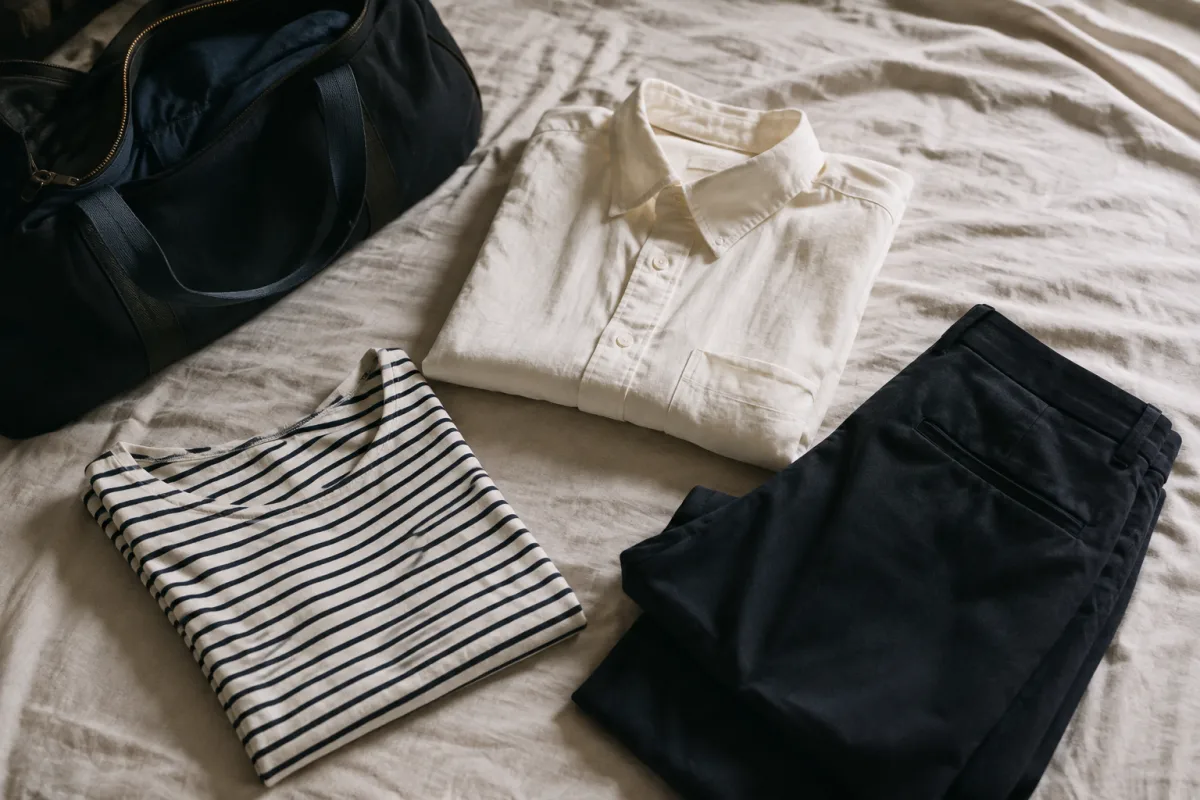
For a city arrival, a clean shirt over a simple top can change the appearance of the same trousers without requiring a complete change. A knit can move from the cabin to an evening walk. These are examples of useful repetition, not a requirement to dress formally while travelling.
If an important meeting or event follows the flight, pack an appropriate fresh option where you can reach it. Do not make one travel outfit responsible for a situation it cannot reasonably serve.
Keep a small refresh kit within reach
Choose only the personal-care items you normally use and can carry under the applicable rules. Keep them together so you do not have to search through the main bag. A spare top or essential change can be useful when your journey calls for one; it is a practical decision, not an automatic extra outfit for every flight.
Check containers and closures before leaving. Keep products away from documents and electronics. Our carry-on packing guide explains how to divide the bag into journey essentials and destination clothing.
Avoid buying a separate travel identity
Before buying anything, assemble the outfit from your current wardrobe. The comfortable trousers, simple top and familiar knit you already wear may be the most reliable combination available.
If something is missing, describe the actual problem before shopping: an outer layer that fits over the knit, shoes suitable for both the journey and the city, or a bottom without an uncomfortable closure. A precise need is easier to solve than the vague idea of looking like a traveller.
The pre-departure outfit check
Sit down. Reach overhead. Walk with your packed bag. Take the middle layer off and put it back on. Check the forecast at both ends. If the combination handles those ordinary moments comfortably, it has already passed a more useful test than looking good on a hanger.