A slow walk through the West Village
Walk from Washington Square towards Christopher Park and the Hudson River, with a flexible route, thoughtful stops and space for a proper pause.
In this story
A good neighbourhood walk needs direction, but it does not need a stopwatch. This suggested route moves from Washington Square through the Village towards the Hudson River. It works best as a loose framework: a beginning, a meaningful middle and somewhere to sit at the end.
Allow a generous half-day if you want coffee, lunch and time to read the interpretation at Stonewall. That is a suggested allocation, not a measured walking time. Your route, pace, mobility needs and the day's conditions will change the experience.
Start with a map, then put it away
Use Washington Square as your starting reference. Save Christopher Park and Pier 45 as the next two points. Instead of following the phone continuously, check the next few streets while stationary and look up as you walk.
The appeal of this approach is noticing transitions: an open space giving way to a narrow pavement, a block of shopfronts followed by a quieter residential street. You do not need to identify every architectural style to appreciate a doorway, a shadow or a change in scale.
Keep the route adaptable. Pavement works, crowds and weather can make a parallel street the more comfortable choice. This is a route outline, not an audited step-free itinerary; visitors with specific access requirements should verify their chosen path and facilities before setting out.
Let coffee be a stop, not an objective
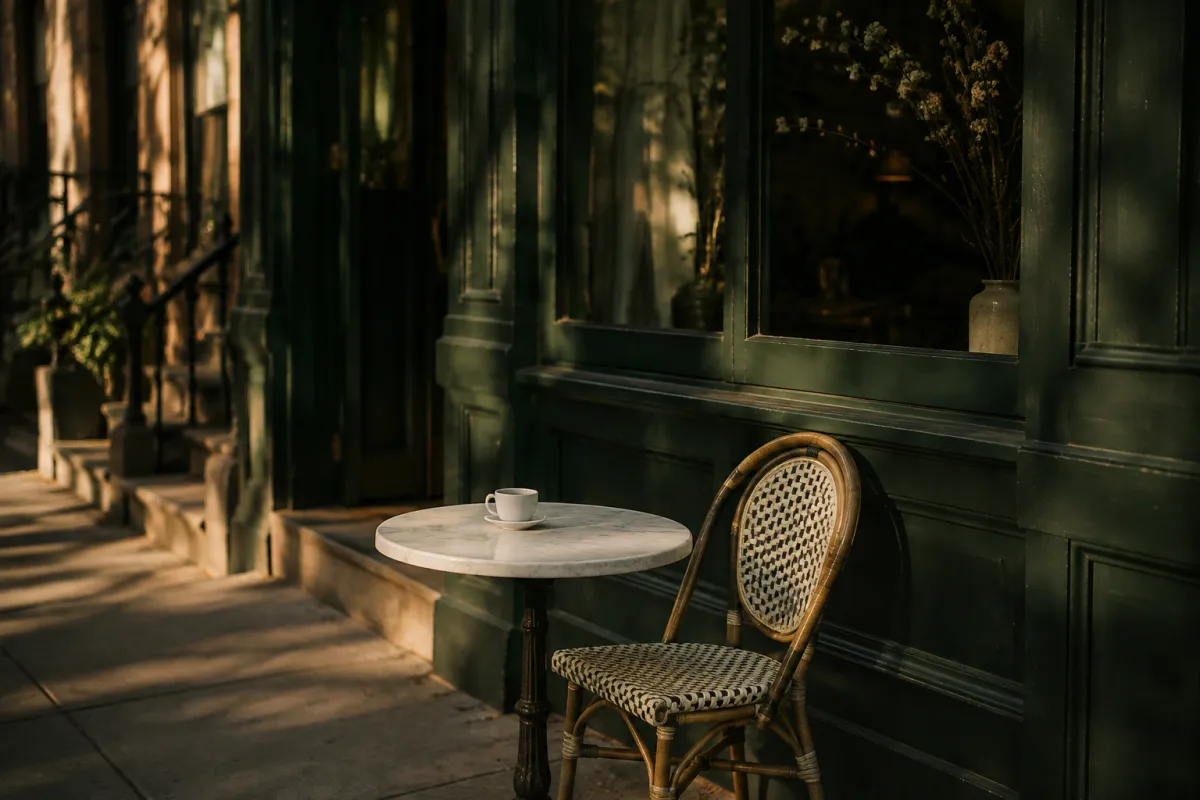
There is no compulsory café on this walk. Look for a place whose current menu, seating and atmosphere suit the moment. Reading the menu before joining a queue is a small habit that saves both money and irritation.
If you sit down, take a few minutes without planning the next stop. A notebook can be useful, but so can doing nothing. When travelling alone, a pause does not need to become either work or entertainment.
Avoid blocking a busy table for a long stretch if the café is full, and ask before photographing staff or other customers. The neighbourhood is somebody else's ordinary day as well as your visit.
Give Christopher Park its proper context
Christopher Park and the surrounding Stonewall National Monument commemorate a pivotal chapter in LGBTQ+ civil-rights history. The monument and visitor centre are on Christopher Street between Seventh Avenue and Waverly Place; the National Park Service publishes visitor information and programmes.
Make time to read rather than treating the park as a quick backdrop. If you want a deeper visit, check the visitor centre's current opening schedule before coming. Do not assume its hours match the park's hours.
This stop changes the rhythm of the walk in a useful way. Streets that might otherwise look simply picturesque become places with public history. Let that context remain part of the visit as you continue through the neighbourhood.
Walk west when you are ready
From the Christopher Street area, head towards the waterfront using a current map and marked crossings. The river should be an option, not a finish line you feel obliged to reach. If you need a meal first, stop; if the weather turns, move indoors and end the walk there.
Pier 45 in Hudson River Park offers lawn, decking and places to sit. Park access, events and maintenance can affect what is available. Check the park's notices and avoid planning around a guaranteed empty seat or sunset.
Once you arrive, resist immediately planning the next neighbourhood. Notice the different pace of the waterfront. A short sit can be the entire purpose of reaching it.
Choose your ending before adding more
There are three good ways to finish. Return towards your accommodation; have an early meal in the area; or continue walking only if you still feel interested and comfortable. Adding another famous attraction by default can turn the last part of the day into transit.
If you are incorporating this walk into a longer stay, leave your major museum visit for another day. Our two-day solo itinerary uses this route as the foundation of its outdoor day.
Bring less than you think
- A charged phone with your route and return address saved.
- A layer suited to the forecast and time beside the river.
- Water and any personal essentials you need for the day.
- A bag that stays comfortable while standing and walking.
- Enough flexibility to finish earlier than planned.
There is no prize for completing a neighbourhood. The successful version of this walk is the one in which you notice where you are.
Planning sources checked 5 September 2026. This is an editorial route suggestion, not a guided tour or a guarantee of current access conditions.