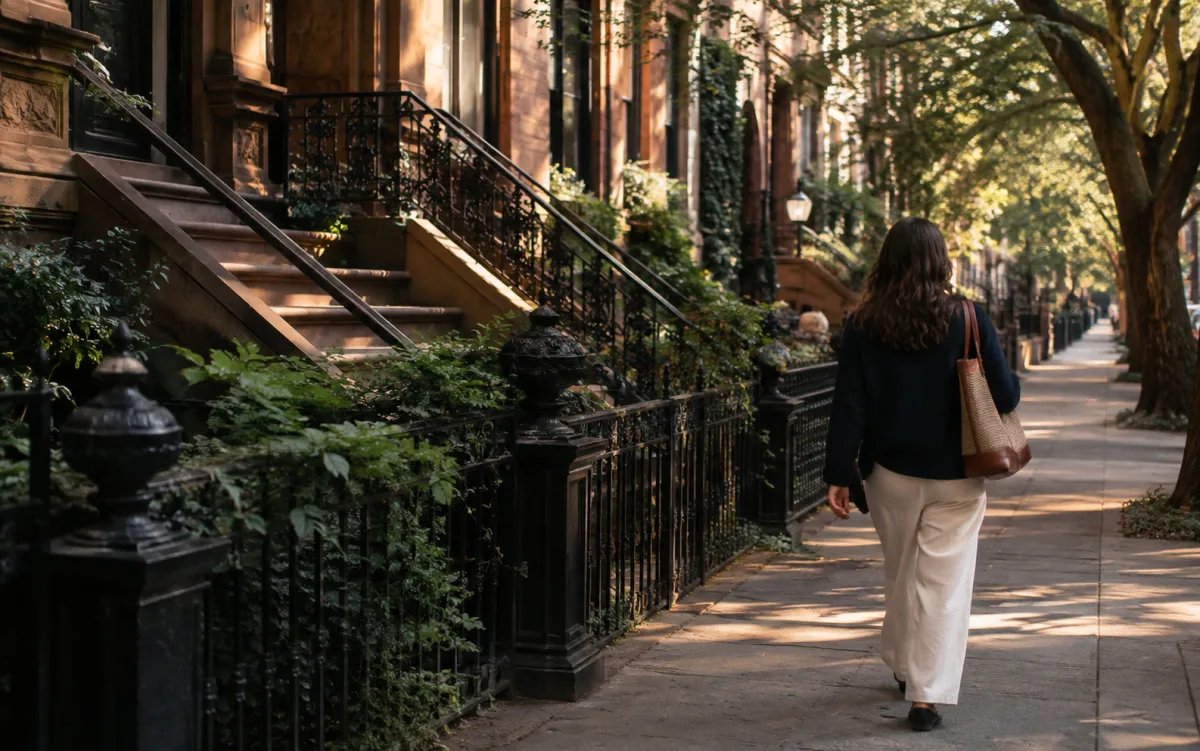
The pleasure of visiting a museum alone
A practical guide to a solo museum visit: choose a theme, look in three passes, take useful notes and leave before attention becomes exhaustion.
In this story
A museum visit alone removes a familiar negotiation. You can spend fifteen minutes with one object and pass the next room without explanation. You can read every label, or begin by looking. The useful question is not how to see everything, but how to make your attention feel like your own.
This is an editorial method for planning and enjoying a visit, not an art-history lesson. You do not need specialist vocabulary, a new notebook or a complete understanding of the collection to use it.
Choose a visit you actually want
Begin with interest, then check the practical details. Is there an exhibition you are curious about? A medium you enjoy? A question that keeps returning? Those are better starting points than choosing solely because an institution appears on every itinerary.
For a New York visit, review the current programmes and planning information at The Met or MoMA. Confirm admission, access and any essential exhibition arrangements directly. The suggestions below work in either setting, but they do not promise that a particular gallery or artwork will be on view.
Decide what a satisfying visit would contain. That might be one exhibition, three rooms and lunch. It does not need to include every floor.
Give yourself a first pass without obligations
On the first pass through a room, notice what attracts you. Colour, scale, an unfamiliar material, a face, a title: any of these is a legitimate beginning. You are allowed to be curious before you are informed.
If the room is crowded, move to somewhere with space instead of forcing the sequence you planned. Keep circulation and other visitors in mind. Attention is easier when you are not simultaneously negotiating a bottleneck.
Choose one work to return to. The decision does not need to be permanent. It is simply a way of moving from scanning to looking.
Look again before reading everything
On a second pass, spend a little longer with that work. What did you miss at first? Where does your eye go? What feels deliberately repeated or left unresolved? Describe what is present before deciding what it means.
Then read the label. Let the context revise your first impression rather than replace it. You might discover that a material, date or intended use changes the way you see the object. You might also find that your original response remains the most interesting part.
This order is a suggestion, not a rule. If contextual information helps you enter a work, read first. The point is to choose how you look instead of automatically moving at the pace of the room.
Use a third pass to make a connection
Find another work that relates to the first. It could use a similar colour, deal with a comparable subject or produce an entirely different mood through the same material. The connection can be personal and provisional.
Write one sentence about the pair if you want to remember it. A useful note is specific enough to bring the experience back: “The small drawing felt louder than the enormous painting.” You do not have to produce an authoritative interpretation.
Follow current photography rules. If photography is permitted, consider recording the identifying label as well as the work, without obstructing others. A picture is more useful later when you know what it shows.
Schedule a break before you need one
It is easy to mistake walking through galleries for sustained engagement. If everything starts to look equally important or equally uninteresting, take a break. Sit where seating is available, have water where permitted, or step into an appropriate rest area.
Before continuing, ask whether there is something you actively want to see. If the answer is no, leave. Admission gives you the opportunity to visit; it does not create an obligation to stay until closing.
If you are planning a full city day, put the museum before an unstructured meal rather than before another demanding booking. Our rainy-day New York guide shows how to build a day around one indoor anchor.
Take one thing back into the city
On leaving, choose a detail to carry into the next hour. Look for a colour in the street, notice the design of a chair, or pay attention to the framing of a shop window. The museum does not need to end at its doors.
Later, keep only the notes and photographs that still interest you. A small, memorable collection is easier to revisit than hundreds of images taken to prove you were there.
Your three-pass reminder
- Notice what draws you in.
- Return, look longer and add context.
- Connect it to something else, then decide whether to continue.
Institutional planning links checked 5 September 2026. The looking method is an original editorial suggestion; individual access and visitor policies are set by each museum.